The coding here for use by non-physician health care professionals, including psychologists, LCSW, family therapists & mental health counselors. These codes recognize value in the collaborative roles taken in caring for our patients.
For a patient who has an established or suspected underlying physical illness or injury, health and behavior assessment and intervention services can be used when addressing an assortment of physical health issues including:
• Patient Adherence to Medical Treatment
• Symptom Management
• Health-Promoting Behaviors
• Health-Related Risk-Taking Behaviors
• Overall Adjustment to Physical Illness
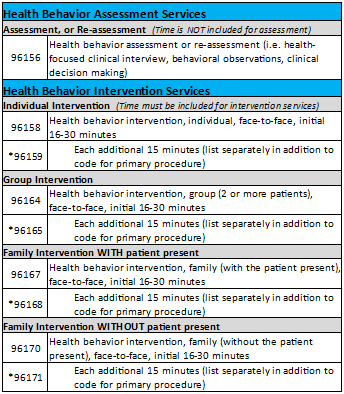
CRITERIA FOR HEALTH & BEHAVIOR ASSESSMENT & INTERVENTION SERVICES
· The patient has an established or suspected underlying physical illness or injury, and the purpose of the assessment or re-assessment is not primarily for the diagnosis or treatment of mental illness;
· There are indications that psychological, behavioral, and/or
psychosocial factors may be affecting the treatment or medical
management of an illness or an injury;
· The patient is alert, oriented, and has the capacity to understand and to respond meaningfully during the face-to-face encounter;
· The patient has an established or suspected underlying physical illness or injury needing a health behavior evaluation and/or intervention to successfully manage their physical illness and activities of daily living;
· The patient can be referred from a medical or mental health care provider, or self-referred to seek assistance in addressing the role of psychological and/or behavioral factors affecting an underlying
physical health condition.
DOCUMENTATION TIPS
Start, Stop and Total Duration of the service must be clearly documented
Document reason for visit – be specific, not simply “follow up”
Progress notes shall include:
- assessment of the patient’s progress or lack of progress
- brief description of the progress made, if any
- significant changes in symptoms or functioning
- significant events in the life of the patient
- recommendation for modifications to the treatment plan, if applicable
The first diagnosis should be the main condition managed during the visit.
- A primary medical diagnosis is required for H&B codes, with behavioral health diagnoses permissible as secondary.
Report any secondary diagnoses that are relevant to the current visit, including chronic conditions managed or treated during the visit.
WHO MAY USE H&B CODES?
H&B codes are for use by qualified non-physician health care professionals (QHCPs), this includes:
· Clinical social workers
· Mental health counselors
· Clinical psychologists
· Family therapists
Physicians should report appropriate E&M codes.
H&B codes are intended to reflect the roles interdisciplinary care & working together.
 The Clinician's Digest